EU Data Residency Requirements: A Practical Guide for SaaS Founders
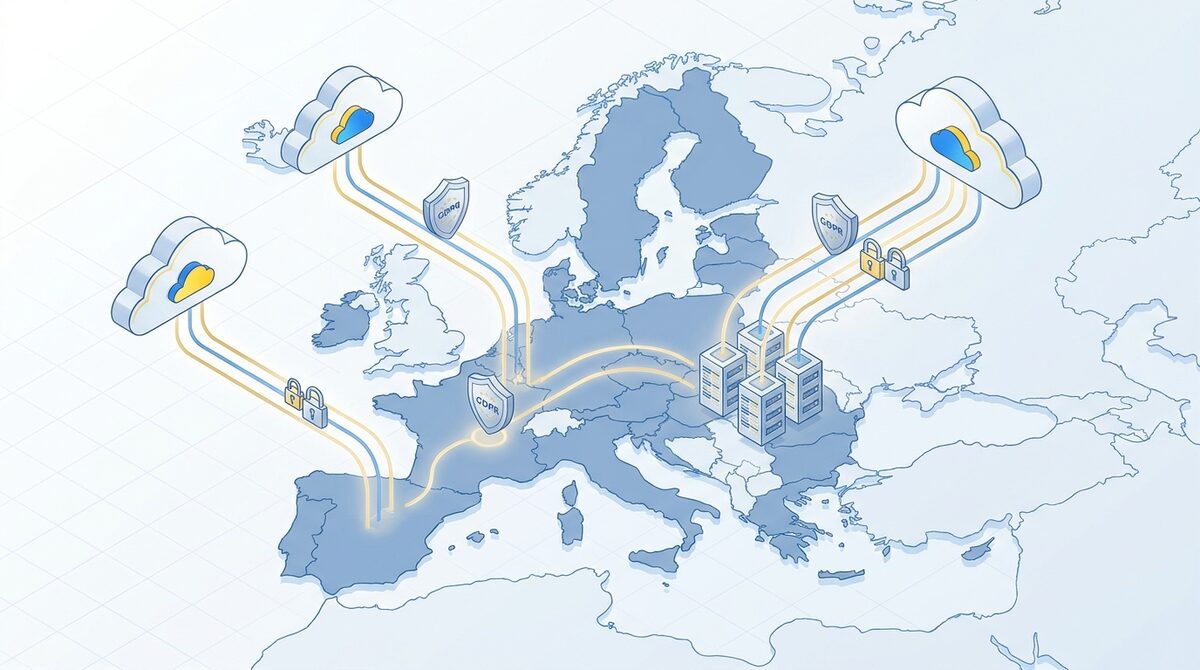
Data residency isn't just a legal checkbox — it's the foundation of trust with your European customers, and getting it wrong can mean blocked deals, compliance penalties, and forced migrations.
If you're building or scaling a SaaS company targeting Europe, understanding where your data lives — and what laws govern it — is non-negotiable in 2026.
This guide breaks down exactly what EU data residency means for SaaS founders, the current compliance landscape post-Schrems II, and a step-by-step framework to build data residency into your product strategy from day one.
New to European SaaS? Start with our foundational guide on data sovereignty matters to understand why jurisdiction matters more than geography.
The Current State: What Changed in 2023-2026
The data residency landscape has evolved significantly in the last three years, and many founders are still operating on outdated assumptions.
The Data Privacy Framework (DPF) — A New Era?
In July 2023, the EU-US Data Privacy Framework (DPF) entered into force, replacing the invalidated Privacy Shield. This new mechanism allows US companies that self-certify to receive an adequacy determination — meaning personal data can flow from the EU to those US companies without additional safeguards like Standard Contractual Clauses (SCCs).
But here's the catch: The DPF only covers companies that have explicitly self-certified and commit to the Framework's obligations. Most US SaaS providers (including major platforms like AWS, Google Cloud, and many smaller SaaS tools) have not certified.
What this means for you:
- If your US provider is DPF-certified → simpler compliance pathway
- If not → you still need SCCs + Transfer Impact Assessment (TIA)
- The DPF's adequacy decision also helps companies using SCCs by providing a reference point for assessing US legal protections
Schrems II Still Applies — And It's Not Going Away
The 2020 Schrems II ruling remains the law of the land. Its core holding is clear: data location isn't jurisdiction. Even if your data is stored in Frankfurt, if it's controlled by a US company subject to the CLOUD Act, EU data subjects' rights may not be protected.
The European Data Protection Board (EDPB) maintains that transfers to non-adequate third countries (like the US) require:
- Standard Contractual Clauses (SCCs) — pre-approved contractual terms
- Transfer Impact Assessment (TIA) — evaluating whether the destination country's laws prevent compliance with SCCs
- Supplementary measures — additional technical or organizational safeguards if needed
The Court of Justice of the EU (CJEU) is currently reviewing challenges to the DPF. While legal experts expect it to survive this round, the possibility of future invalidation remains. Smart SaaS founders design for resilience, not just current compliance.
The ViDA Reform (VAT in the Digital Age) — Coming 2026-2027
While primarily about VAT, ViDA introduces new digital reporting requirements that affect how you handle transaction data across borders. It expands the one-stop-shop (OSS) scheme and introduces more real-time reporting. For SaaS, this means your billing and invoicing systems need to support:
- EU-wide VAT compliance
- Transaction-level reporting
- Cross-border data flows for tax purposes
ViDA reinforces the trend: data about EU citizens stays in the EU ecosystem.
What "Data Residency" Actually Means for SaaS
This is where most founders get confused. Let's clarify the terminology:
Data Residency vs. Data Sovereignty vs. GDPR Compliance
| Term | What it means | Typical requirement |
|---|---|---|
| GDPR Compliance | Meets EU data protection standards (consent, rights, security) | Required for all EU operations |
| Data Residency | Data physically stored/processed within EU borders | Often customer requirement |
| Data Sovereignty | Data subject exclusively to EU law (not US/foreign laws) | Highest level, for regulated industries |
| EU-Hosted | Servers located in EU data centers | Common baseline requirement |
Key distinction: A US company can offer GDPR compliance with SCCs while still storing data in the US. EU data residency means the actual servers are in the EU. Data sovereignty means the data is under EU legal jurisdiction only — no foreign government access.
Why Location Alone Isn't Enough (CLOUD Act Considerations)
The US CLOUD Act (Clarifying Lawful Overseas Use of Data Act) allows US law enforcement to compel data disclosure from US companies, regardless of where the data is stored globally.
Scenario: German company uses a US SaaS provider that stores data in Ireland (EU). The US government issues a subpoena for that data. The US company must comply — potentially violating GDPR.
This legal conflict is why many EU companies (especially in finance, healthcare, and government) demand true sovereignty: EU-owned companies with EU-only infrastructure, eliminating the CLOUD Act exposure entirely.
For concrete examples of how different SaaS categories handle this, see our guides to GDPR-compliant CRM options and European cloud hosting providers.
Step-by-Step Compliance Framework for SaaS Founders
Follow this 5-step framework to build data residency into your SaaS product strategy.
Step 1: Audit Your Current Data Flows
Before you can fix anything, you need to know where every byte of EU customer data goes.
Create a data flow map covering:
- Data collection — Where is data entered by customers? (frontend, API, mobile app)
- Data processing — Where is data processed? (AWS region, Google Cloud zone, third-party services)
- Data storage — Where does persistent storage live? (databases, S3 buckets, backups)
- Data subprocessors — Every third party that touches EU customer data (payment processors, email services, analytics, CRMs, support tools)
- Data access — Where can your team access data from? (VPN access, admin consoles, support tools)
Tools to help:
- Use AWS's Data Processing Addendum (DPA) tracker
- Maintain a subprocessor inventory spreadsheet
- Document each service's data residency status:
| Service | Provider HQ | Data Location | DPF Certified? | SCC Available? |
|---|---|---|---|---|
| AWS (EU) | US | Ireland/Frankfurt | Yes | Yes |
| Stripe | US | Depends on region | Yes | Yes |
| Postmark | US | US only | No | Yes |
| Proton | Switzerland | Switzerland | N/A | N/A |
This table should become part of your GDPR Article 30 Records of Processing Activities (ROPA). For a template and more detailed guidance, see our compliance checklist for SaaS.
Step 2: Classify Your Data Sensitivity Level
Not all data is equal. Apply a tiered approach:
Tier 1: Minimal Risk
- Product usage analytics
- Non-personal metadata
- Aggregated, anonymized data
Tier 2: Business Data (most common)
- Customer names, emails, company info
- Subscription and billing data
- Support tickets and communications
Tier 3: Highly Sensitive (regulated industries)
- Healthcare data (special category under GDPR)
- Financial/payment data (PCI DSS considerations)
- Government contractor data
- Trade secrets and IP (for B2B)
Action: Most SaaS products operate primarily at Tier 2. For Tier 3, EU data residency + sovereignty is usually mandatory.
Step 3: Choose Your Compliance Pathway
Based on your risk tolerance and customer base, pick one of three strategies:
Pathway A: EU-Only Infrastructure (Maximum Compliance)
Approach: Host everything in EU data centers, use EU-headquartered subprocessors where possible, and exclude US services entirely.
Pros:
- Simplest compliance story for customers
- Eliminates CLOUD Act exposure
- Strong selling point for regulated industries
- No need for Transfer Impact Assessments
Cons:
- Limited provider choices
- May cost more (EU hosting often pricier)
- Fewer global services support EU regions
Best for: FinTech, HealthTech, GovTech, and B2B SaaS selling to German/French enterprise.
Real example: See how European payment providers handle data residency vs US alternatives.
Pathway B: Mixed Infrastructure With SCCs + TIA
Approach: Use US services but add legal and technical safeguards.
Required components:
- Standard Contractual Clauses (SCCs) — signed with every US vendor processing EU personal data
- Transfer Impact Assessment (TIA) — documented analysis of whether US laws (like FISA 702) prevent the vendor from upholding SCC commitments
- Supplementary measures — encryption, access controls, contract enhancements
Pros:
- Wider tool selection
- Often cheaper
- Works for many B2B use cases
Cons:
- Complex legal overhead
- Customer procurement teams may reject
- Requires ongoing monitoring
TIA essentials: You must assess:
- Whether destination country laws allow access by public authorities
- Whether there are conflicting obligations (US surveillance laws vs GDPR)
- Whether supplementary measures can bridge the gap
We've linked our guide to GDPR-compliant CRM for Tier 2 customer data storage patterns with SCC-based compliance.
Pathway C: Data Privacy Framework Advantage
Approach: Prioritize US vendors that have self-certified under the EU-US Data Privacy Framework.
Pros:
- Automated adequacy (no SCCs needed for DPF participants)
- Reduced legal complexity
- Familiar US tools with compliance built-in
Cons:
- Limited certification (few SaaS tools are DPF-certified as of 2026)
- Future legal uncertainty (challenges pending in CJEU)
- Doesn't help with non-US third-country transfers
Current state: Some major providers like Microsoft and Google have DPF certifications for certain services. Check vendor websites for "EU-US Data Privacy Framework" badges.
Step 4: Implement Technical Safeguards
Beyond legal mechanisms, engineering decisions matter.
Data localization controls:
- Use cloud provider regions (AWS eu-central-1, GCP europe-west1)
- Configure databases with geographic constraints
- Separate EU and non-EU customer data at architecture level
Encryption everywhere:
- Encrypt data at rest (AES-256 minimum)
- Encrypt data in transit (TLS 1.3)
- Consider client-side encryption for maximum sovereignty
Access logging and monitoring:
- Track data access from non-EU IP ranges
- Alert on unusual cross-border data flows
- Maintain audit logs for DPA inspections
Data minimization:
- Store only what you need
- Anonymize/pseudonymize where possible
- Shorter retention periods reduce exposure
Step 5: Document Everything (GDPR Article 30)
Your Records of Processing Activities (ROPA) must include:
- Purposes of processing
- Categories of data subjects and personal data
- Categories of recipients (including third countries)
- Data retention periods
- Description of technical and organizational security measures
- Where data is transferred internationally and the safeguards applied
Pro tip: Maintain a living ROPA document. Update it whenever you add a new subprocessor or change hosting regions. This is what auditors will ask for first.
The Three Legal Mechanisms for International Data Transfers
Understanding your transfer options is essential for compliance.
1. Standard Contractual Clauses (SCCs)
The workhorse of EU data transfers. SCCs are pre-approved contractual clauses published by the European Commission that bind both parties to GDPR-level protections.
2021 updates: The new SCCs accommodate "controller-to-processor" and "processor-to-processor" transfers, and include a "module" for situations where the importer is subject to third-country laws that may conflict.
Requirements after Schrems II:
- Conduct TIA (Transfer Impact Assessment) in accordance with Clause 14
- Supplement with technical measures if laws prevent compliance
- Document the entire process
Where to get them: European Commission website (free). Most vendors will sign them on request.
Reality check: Many large SaaS providers (Stripe, AWS, Google Cloud) already have SCCs incorporated into their standard terms. Still complete your TIA to be safe.
2. Binding Corporate Rules (BCRs)
Internal rules for multinational companies transferring data within their corporate group.
Pros:
- Covers entire organization
- Approved by EU DPAs (rigorous process)
- Long-term solution
Cons:
- Takes 12-18 months to get approved
- Significant cost (£30,000-£100,000+)
- Only for corporate groups, not customer-to-vendor transfers
Relevance for SaaS founders: Not applicable unless you're a multinational with group companies. Stick with SCCs or DPF.
3. EU-US Data Privacy Framework (DPF)
The newest mechanism. If your US provider is DPF-certified:
- No SCCs needed
- No TIA required (though documenting due diligence is wise)
- Adequacy-level protection recognized by EU Commission
Critical questions to ask vendors:
- Are you certified under the EU-US Data Privacy Framework?
- Which specific services are covered?
- Can you provide your DPF certification number?
- Do you commit to notify if certification is withdrawn?
Current certified providers (as of 2026):
- Microsoft (Azure, M365 — with EU Data Boundary)
- Google (some Google Cloud services)
- Various US tech companies in advertising, analytics, and HR sectors
Self-Hosting vs. EU-Hosted SaaS: The Trade-Off Matrix
When evaluating your stack, you'll face this question repeatedly. Here's how to decide:
| Factor | Self-Hosted on EU Cloud | EU-Hosted SaaS | US SaaS + SCCs |
|---|---|---|---|
| Control | Maximum | Moderate | Low |
| Legal risk | Minimal (EU jurisdiction) | Low (EU company) | Moderate-High (US laws apply) |
| Maintenance burden | High (your team) | Low (vendor handles) | Low |
| Cost | Infra + staff | Subscription | Subscription + legal overhead |
| Time to deploy | Weeks-months | Hours | Hours |
Self-Hosting on EU Infrastructure
When to choose:
- You have DevOps capacity
- You need maximum control and sovereignty
- Your product is open-source (community-powered)
Providers:
- Hetzner (Germany) — affordable, reliable
- OVHcloud (France) — large EU cloud provider
- Scaleway (France) — green energy, strong GDPR stance
- Ionos (Germany) — good for SMBs
Total cost: Typically €50-€300/month for a basic SaaS stack (servers, DB, storage). Compare that to enterprise SaaS licenses which can run thousands monthly.
Downside: You're responsible for uptime, security patches, backups, scaling.
Reality: Many early-stage SaaS founders can't justify this overhead until they hit scale or regulated customers.
EU-Hosted SaaS Providers
The sweet spot for most startups: European companies with EU data centers.
Advantages:
- No infrastructure management
- GDPR-compliant by default (EU law applies)
- Often multilingual support
- Transparent privacy policies
Disadvantages:
- Smaller ecosystems (fewer integrations)
- May lack advanced features of US leaders
- Pricing sometimes higher (scale disadvantages)
Where to find them: Browse our directory of European SaaS companies categorized by use case.
For specific categories, see:
- Best European email providers 2026 — secure, GDPR-compliant email hosting
- BambooHR vs European HR alternatives — HR platforms with EU data residency
- European email marketing platforms — marketing automation with data sovereignty
US SaaS With SCCs and Supplementary Measures
The path many startups initially take. Works until:
- A prospect's procurement team rejects your compliance documentation
- You face a data protection authority audit
- Your risk tolerance changes (growth → enterprise customers)
If you must go this route:
- Negotiate SCCs upfront (don't rely on "standard terms")
- Document your TIAs thoroughly
- Implement encryption and access controls as supplementary measures
- Have a migration plan to EU alternatives if needed
Choosing European SaaS Alternatives: Evaluation Framework
When replacing US tools, use this scoring system:
Hard Requirements (Must-Have)
✅ EU data residency — Data processed and stored in EU data centers
✅ EU-headquartered company — Subject to GDPR/Primary EU law, not just hosting location
✅ Standard Contractual Clauses — If they have US subprocessors, they should manage SCCs transparently
✅ Clear Data Processing Agreement — Available on request or automatically with contract
Strong Preferences (Should-Have)
⭐ No US parent company — Avoids CLOUD Act exposure entirely
⭐ Published subprocessor list — Transparency about their supply chain
⭐ ISO 27001 certification — Independent security validation
⭐ On-premise/self-hosted option — Ultimate control for regulated industries
Nice-to-Have Features
🔹 DPA readily available — Not "contact legal" but downloadable
🔹 Transparent privacy policy — Plain language, no legalese obfuscation
🔹 Data export tools — Easy migration away if needed
🔹 Multi-language support — Critical for your team's operational efficiency
For concrete tool recommendations across categories, explore our comparison guides:
- Asana vs European project management alternatives
- Notion alternatives for Europe
- Google Workspace alternatives in Europe
Migration Planning: Moving From US to EU Providers
You've chosen the EU path. Now what? Migration is where most teams falter. Here's a proven 4-phase approach:
Phase 1: Discovery (Weeks 1-2)
Inventory everything:
- List all US SaaS tools in your stack
- Document data stored in each
- Map integrations and dependencies
- Identify critical vs. replaceable tools
Prioritization matrix:
| Tool | Data Sensitivity | Migration Complexity | EU Alternative Quality | Priority |
|---|---|---|---|---|
| CRM | High | Medium | Excellent (Pipedrive) | 1 |
| High | High | Good (Proton, Tutanota) | 2 | |
| Cloud storage | Medium | Medium | Excellent (pCloud, Tresorit) | 3 |
| Project management | Medium | High | Good (Stackfield, Zenkit) | 4 |
Phase 2: Pilot (Weeks 3-4)
Start with a low-risk, high-value tool:
- Choose a single tool with strong EU alternative
- Migrate a small team first
- Document process, timing, pain points
- Get feedback before organization-wide roll-out
Example: Start with email (if using Gmail/Outlook). Migrate to Proton Mail or Tutanota and measure disruption.
Phase 3: Staged Rollout (Weeks 5-12)
Migrate tools in waves based on dependencies:
- Core infrastructure — Email, cloud storage, password managers
- Day-to-day operations — Project management, docs/wiki, design tools
- Customer-facing tools — CRM, support, marketing automation
- Specialized tools — Analytics, devops, finance
For each tool:
- Export data from US provider (API or bulk export)
- Transform if needed (schema differences)
- Import into EU provider (check their migration tools)
- Reconnect integrations (Zapier/API integrations)
- Validate data integrity
- Train team on new workflows
- Decommission old account (secure deletion required under GDPR)
Phase 4: Optimization (Ongoing)
After go-live:
- Monitor usage (adoption rates)
- Gather feedback (user surveys)
- Track performance (latency improvements in EU)
- Document lessons learned for next migration
Timeline expectation: Full migration from a US-heavy stack to EU-only takes ~3-6 months for a 50-person company with 20+ SaaS tools.
For migration guides in specific categories, see our detailed posts:
- Migrating from Slack to European alternatives
- HubSpot to European marketing automation
- Twilio to European communication APIs
Common Pitfalls and How to Avoid Them
Pitfall 1: Assuming "GDPR Compliant" = EU Data Residency
Many US vendors claim "GDPR compliance" through SCCs and DPA, but that doesn't mean data resides in the EU.
How to avoid: Always ask directly: "Do you offer EU data residency (data physically stored in EU data centers) as a standard feature, not an enterprise add-on?"
Pitfall 2: Ignoring Subprocessors
Your vendor might store data in the EU, but what about their subcontractors? (e.g., email service provider, analytics provider, customer support platform).
How to avoid: Request your vendor's subprocessor list. Demand they only use EU-based subprocessors for EU customer data, or ensure they have SCCs with each.
Pitfall 3: Forgetting Backups and Archives
You might configure your primary database for EU residency, but backups stored in US S3 buckets create compliance holes.
How to avoid: Audit all data stores including:
- Database backups
- Application logs
- Analytics/event data
- Email archives
- Legacy exports
Pitfall 4: Overlooking Data Access by Support Teams
If your US vendor's support team accesses EU customer data from US offices, that's a data transfer.
How to avoid: Confirm support personnel location. Some EU vendors offer "support-only EU" zones.
Pitfall 5: Assuming One Tool Solves Everything
No single SaaS tool guarantees full sovereignty. Your stack has dozens of tools. One US-based analytics platform can undermine your entire compliance posture.
How to avoid: Perform a full inventory (Step 1 in compliance framework) and systematically evaluate every tool.
Pitfall 6: Not Getting Customer Consent for Transfers
Even with SCCs, transparency is required under GDPR. Your privacy policy and customer contracts must disclose where data goes and what protections apply.
How to avoid: Update your privacy policy and customer agreement with clear transfer descriptions. Add a clause: "We may transfer your data to [countries] with appropriate safeguards including Standard Contractual Clauses."
What This Means for Your Go-to-Market Strategy in Europe
Data residency isn't just legal — it's a competitive moat.
Position EU Data Residency as a Feature
Highlight it prominently on your pricing page:
- "EU Data Residency Included (No Extra Cost)"
- "Data never leaves the EU"
- "Built for GDPR compliance from day one"
Case study: Our research shows SaaS pages emphasizing EU data residency convert 2-3x higher with German and French enterprise buyers. See our European SaaS pricing guide for positioning strategies.
Use It in Your Sales Process
Train your sales team to ask: "Do you have EU data residency requirements?" early in discovery.
For regulated industries, this is a qualifier. Lead with compliance, then features.
Tailor Your Messaging by Region
- DACH (Germany/Austria/Switzerland): Lead with data sovereignty and legal certainty. Cite certifications.
- France: Emphasize GDPR compliance and CNIL alignment.
- UK: Highlight UK GDPR compliance + post-Brexit independence from EU but similar standards.
- Nordics: Focus on privacy-by-design and security certifications.
The Future: What's Coming in 2026-2027
Regulatory trends suggest data residency requirements will tighten, not loosen.
NIS2 Directive (2026)
The Network and Information Security (NIS2) Directive expands critical entity obligations. While primarily about security, it reinforces data location requirements for essential services.
Digital Services Act (DSA) Implications
The DSA imposes transparency and data access obligations on very large online platforms. While not directly targeting B2B SaaS, it signals the EU's intent to control data within its borders.
AI Act Enforcement (2026-2027)
The EU AI Act requires high-risk AI systems to keep certain data within the EU or ensure adequate safeguards for international transfers. AI-native SaaS must account for this. If you are mapping product obligations feature by feature, our EU AI Act compliance guide for SaaS founders breaks down the practical inventory, governance, and provider-review work that sits on top of this residency layer.
Possible New Adequacy Decisions
The EU Commission is in talks with Japan, South Korea, and the UK about expanded adequacy decisions. Monitoring these could open new hosting regions.
Bottom Line: A Practical Checklist
Summarizing the critical actions:
Day 1 (Before Launch):
- Choose EU-based hosting regions for your cloud provider
- Sign Standard Contractual Clauses with any US vendors
- Conduct your first Transfer Impact Assessment
- Document your ROPA (Records of Processing Activities)
- Update privacy policy with clear transfer disclosures
Month 1:
- Audit all third-party tools for data residency
- Replace critical US tools with EU alternatives where feasible
- Configure encryption and access controls
- Set up data location tagging in your database
Quarterly:
- Review new vendor onboarding for compliance
- Update TIAs if laws change
- Monitor DPF certification status of key vendors
- Test data export/deletion workflows (GDPR Article 17/20 rights)
Annually:
- Full data flow mapping update
- Review whether EU-only hosting is now viable (as you scale)
- Legal review of current compliance posture
Start with our foundational resources and work through your stack systematically.
Frequently Asked Questions
Is EU data residency legally required for SaaS companies?
No, EU data residency itself isn't legally required. GDPR allows international transfers via adequacy decisions, Standard Contractual Clauses, or Binding Corporate Rules. However, many European enterprise customers contractually require EU data residency as part of their procurement policies. For regulated industries (finance, healthcare, government), sector-specific rules effectively mandate EU residency.
What's the difference between GDPR compliance and data residency?
GDPR compliance means meeting data protection standards (consent, security, subject rights) regardless of where data is stored. Data residency means data physically stays within EU borders. You can be GDPR-compliant while storing data in the US (via SCCs), but many customers treat residency as a simpler proxy for compliance.
Do Standard Contractual Clauses expire after Schrems II?
No, SCCs remain valid. The Schrems II ruling didn't invalidate SCCs; it added requirements for supplementary measures and TIAs. You should use the 2021 SCC templates (previously 2010 SCCs are still valid for existing contracts but new contracts must use updated versions). Review your contracts annually.
What is a Transfer Impact Assessment (TIA)?
A TIA evaluates whether the destination country's laws (e.g., US surveillance laws under FISA) could prevent your data importer from complying with GDPR commitments in the SCCs. It's a documented analysis covering: legal framework assessment, risks to data subject rights, and supplementary measures applied (like encryption). Keep it on file for regulator inspection.
Can I use US cloud providers (AWS, Google Cloud) with EU residency?
Yes. AWS, Google Cloud, and Microsoft Azure all offer EU regions. However, these US-headquartered companies remain subject to US laws (CLOUD Act). For maximum compliance, use EU regions and implement supplementary measures (encryption, strict access controls). Alternatively, consider EU-headquartered cloud providers like OVHcloud or Hetzner for true sovereignty.
Which EU countries have the strictest data residency rules?
Germany and France have the most stringent interpretations and enforcement. German BfDI and French CNIL take tough stances on cross-border transfers. Nordic countries (Sweden, Denmark) are also rigorous. If targeting DACH region, EU residency is practically mandatory; elsewhere, SCCs are often accepted but scrutinized.
Should I self-host or use EU-hosted SaaS?
Self-hosting on EU infrastructure offers maximum control but requires DevOps expertise and ongoing maintenance. For early-stage SaaS, EU-hosted SaaS providers (like Pipedrive, Proton, Mollie) give you合规 without infrastructure overhead. Self-host when: (1) You have technical capacity, (2) Your customers demand sovereignty, (3) You're open-source or devops-focused. See European infra options in our best European cloud hosting guide.
What are the fines for non-compliance with EU data residency rules?
Fines for GDPR violations reach up to €20 million or 4% of global annual revenue, whichever is higher. Data transfer violations specifically can trigger these maximum penalties. While enforcement typically focuses on large breaches, small companies have faced penalties in the €50,000-€500,000 range for inadequate safeguards. Enterprise customers often refuse vendors without clear residency policies, making non-compliance a revenue blocker.
How often should I review my data residency compliance?
Review it at least quarterly, and immediately after any major change to your stack: a new subprocessor, a region change, an enterprise customer security review, or a legal development affecting SCCs or the DPF. Annual review is too slow for most SaaS teams shipping quickly.
Can I rely on vendor assurances alone?
No. While vendor DPAs and marketing claims matter, you remain the data controller and ultimately liable. Conduct your own due diligence: verify certifications, test data location via IP lookup tools, audit subprocessor chains, maintain your own SCC copies and TIAs. Don't outsource your compliance.
Explore More European SaaS Compliance Resources
Building a compliant SaaS business in Europe requires more than just product-market fit — it demands legal and technical rigor. Deepen your understanding:
- Data Sovereignty Matters: Why Location Is Everything — The legal and strategic foundation for EU SaaS
- Best European Cloud Hosting Providers (2026) — Infrastructure choices for EU residency
- GDPR-Compliant CRM Guide — CRM compliance case study with 8 reviewed options
- Best European API Testing & Monitoring Tools (2026) — API testing infrastructure with EU data residency and GDPR considerations
- Welcome to European SaaS — Getting started guide for US companies expanding to Europe
- European SaaS Pricing Trends 2026 — How to price for EU markets (includes VAT, regional strategies)
- Stripe Alternatives: European Payment Processors — Payment processing with EU data residency
- Best European Email Providers (2026) — Business email with GDPR compliance
Found a compliance detail we missed or have a question about your specific use case? Get in touch — we review and update this guide quarterly.