Why Data Sovereignty Matters More Than Ever in 2026
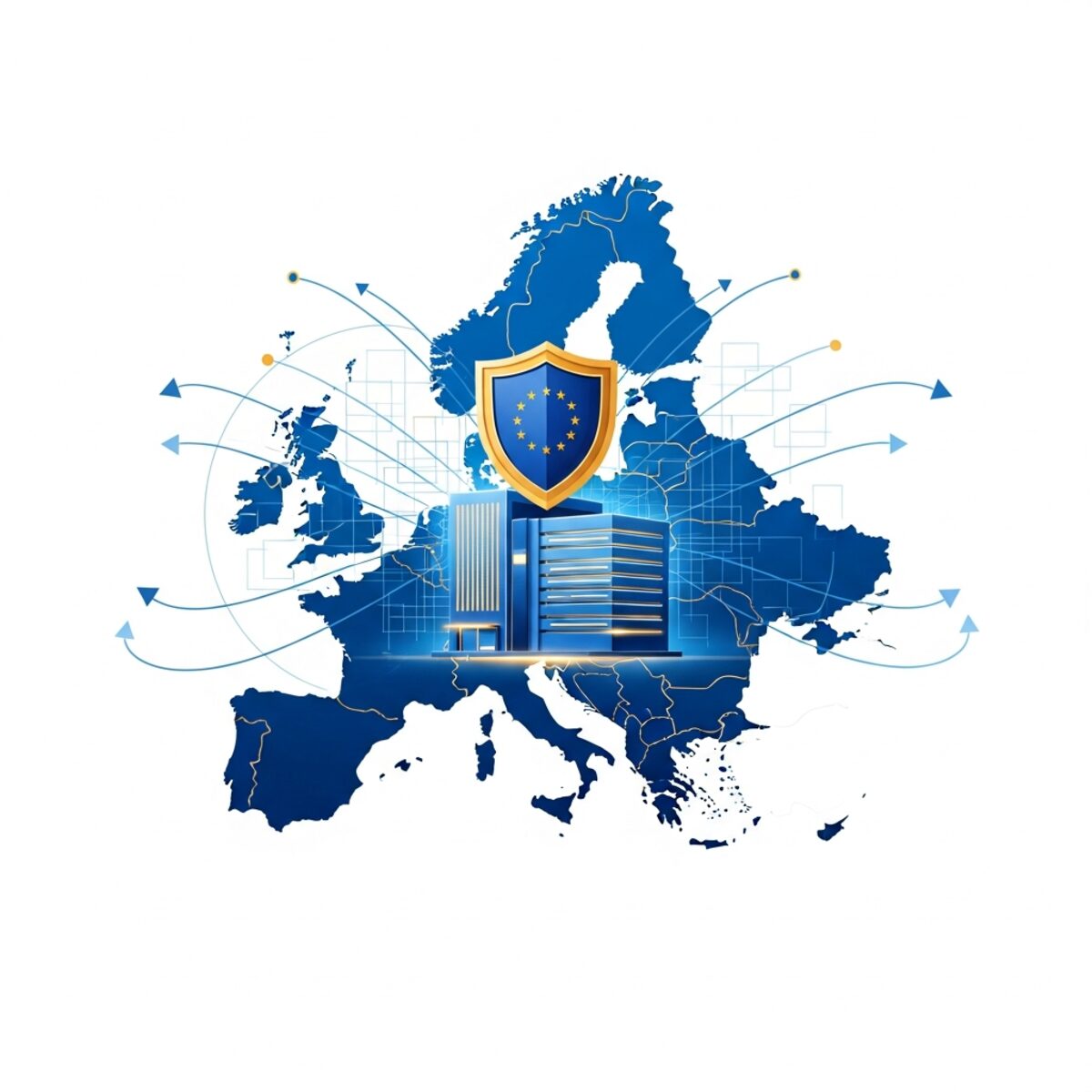
Where does your company's data sleep tonight?
If you're using typical US SaaS tools, the answer is probably Virginia, Oregon, or California. And increasingly, that's a problem.
The Shifting Landscape
Three forces are reshaping where smart businesses store their data:
1. Regulatory Pressure
The EU isn't just making suggestions anymore:
- GDPR enforcement has teeth — Fines have exceeded €4 billion since 2018
- Schrems II killed Privacy Shield — The easy path to US data transfer is gone
- National DPAs are acting — Google Analytics has been banned in Austria, France, Italy, and Denmark
- Digital Markets Act — New rules for big tech platforms are creating compliance complexity
2. Geopolitical Reality
The CLOUD Act gives US authorities access to data held by US companies — anywhere in the world. This isn't theoretical:
- US subpoenas can reach data stored on EU servers if it's held by a US company
- Trade tensions mean data could become a pressure point
- Brexit has created additional complexity for UK-EU data flows
3. Business Continuity
Remember when Russia invaded Ukraine and suddenly:
- Payment processors cut off Russian businesses overnight
- Cloud providers suspended accounts
- SaaS tools became inaccessible
If your critical infrastructure depends on foreign providers, you're exposed to decisions made in distant boardrooms and capitols.
What Data Sovereignty Actually Means
Data sovereignty isn't just "data stored in the EU." It's about control:
| Aspect | Basic Compliance | True Sovereignty |
|---|---|---|
| Storage | EU data centers | EU-owned infrastructure |
| Company | Any company | EU-headquartered |
| Legal | GDPR compliant | EU jurisdiction only |
| Access | Contractual limits | No foreign law access |
| Portability | Export possible | Full data ownership |
A US company running servers in Frankfurt still isn't sovereign — they're still subject to the CLOUD Act and US court orders.
The Real-World Implications
For Healthcare
Patient data under HIPAA in the US has different protections than under GDPR. If you're a European healthcare provider using US tools, you're juggling two regulatory frameworks that don't always align.
For Finance
Financial regulators increasingly expect critical data to remain within jurisdiction. The ECB and national regulators are paying attention to cloud concentration risk.
For Legal
Client privilege has different meanings across borders. Law firms using US document management may face uncomfortable questions about data access.
For Government
Public sector organizations face the strictest requirements. Many now mandate EU-only providers for sensitive operations.
Building a Sovereign Stack
Here's how to evaluate your tech stack for sovereignty:
Questions to Ask
- Where is the company headquartered? — This determines legal jurisdiction
- Where are the servers physically located? — This affects latency and some regulations
- Who owns the infrastructure? — Leased from US hyperscalers isn't sovereign
- What laws apply? — Are they subject to the CLOUD Act or equivalent?
- Can you export everything? — Lock-in is the opposite of sovereignty
Categories to Prioritize
Start with your most sensitive data:
- Customer data — CRM, support systems, analytics
- Financial data — Accounting, payments, banking
- Employee data — HR systems, payroll
- Intellectual property — Documents, code repositories, design files, knowledge bases
- Communications — Email, messaging, video
Further reading: For detailed comparisons in each category, check out:
- Airtable vs European database alternatives for structured data
- Dropbox vs European cloud storage alternatives for file storage
- Canva vs European design & creative alternatives for design tools and creative workflows
- Zoom alternatives for Europe for video conferencing
- Best European API Testing & Monitoring Tools (2026) for API-first SaaS development and testing infrastructure
- Best open source SaaS alternatives for European teams if you want sovereignty gains without defaulting to another closed vendor
European Options Exist
For every category, there are now credible European alternatives:
- Cloud infrastructure: OVHcloud, Scaleway, Hetzner
- Payments: Mollie, Adyen
- CRM: Pipedrive, Teamleader
- HR: Personio, Factorial — for a detailed comparison of BambooHR vs top European HR platforms, see our comprehensive guide.
- Email: Proton, Tutanota — for a detailed comparison of top options, see our best European email providers guide.
- Design & Creative: Kittl, Linearity — for a full Canva comparison with EU-based design tools, see our guide to European design alternatives.
- Knowledge Management: Slite, Nuclino — for Confluence alternatives hosted in Europe, see our knowledge management comparison.
- Project & Work Management: For European alternatives to Monday.com, Asana, and Trello, see our work management guide and project management roundup.
- Customer Support: Crisp, Zendesk European alternatives — for helpdesk and chat platforms with EU data residency.
- Forms & Surveys: For Typeform alternatives that keep data in Europe, see our guide to European form builders.
- Website Building: Webflow alternatives with EU hosting for web design and CMS platforms.
- Video & Collaboration: Loom alternatives for async video and Miro alternatives for whiteboarding.
- Communication APIs: Twilio alternatives in Europe for SMS, voice, and messaging infrastructure.
- Email Transactional: SendGrid alternatives for EU-based email delivery services.
- Developer Infrastructure: Best European DevOps & CI/CD tools for SaaS teams for code hosting, CI pipelines, observability, and self-hosted delivery stacks.
👉 New to European SaaS? Start with our welcome post for an overview. For category-specific deep dives, see our guides to best European cloud hosting providers and top European accounting software.
The Business Case
Sovereignty isn't just risk mitigation. There are positive reasons too:
Simpler Compliance
No more:
- Standard Contractual Clauses negotiations
- Transfer Impact Assessments
- Worrying about the next Schrems ruling
Customer Trust
"Your data never leaves the EU" is a selling point. In B2B especially, procurement teams are asking about data residency. The same buyer conversations now increasingly include AI governance questions too, which is why we also put together a practical EU AI Act compliance guide for SaaS founders for teams that need to explain models, oversight, and data flows clearly.
Faster Support
European teams in European timezones. No waiting until California wakes up.
Economic Impact
Economic Impact
Every euro spent with a European SaaS company strengthens the European tech ecosystem. That ecosystem will eventually provide more jobs, more innovation, and more options.
Pricing strategy matters too. Our in-depth analysis of European SaaS pricing trends in 2026 covers credit-based AI models, hybrid subscription + usage, regional pricing across the EU, and real cost data from 500+ companies.
Retention and Trust
Data sovereignty also plays into customer retention. European buyers increasingly evaluate vendors not just on features, but on their operating model—where data lives, how compliance is maintained, and whether the product can be trusted for the long term. For teams looking to reduce churn, our guide to SaaS customer retention strategies for European teams in 2026 covers practical plays around trust, pricing, and expansion adoption that align with a sovereign stack.
Getting Started
You don't have to switch everything overnight. Here's a practical approach:
- Audit your stack — List every SaaS tool and where it's headquartered
- Categorize by risk — Which tools hold the most sensitive data?
- Research alternatives — Use our directory to find European options, and explore our guides for specific categories:
- Best European business email providers (2026)
- European design & creative tools
- Confluence alternatives for European teams
- Loom alternatives for async video
- Miro alternatives for collaboration
- Monday.com European alternatives
- EU data residency requirements: A Practical Guide — step-by-step compliance framework for SaaS founders
- Plan migrations — Start with high-risk, easy-to-switch tools
- Update policies — Reflect your new sovereignty stance in procurement
The Bigger Picture
Data sovereignty is about more than compliance. It's about:
- Independence — Not being subject to foreign political decisions
- Resilience — Reducing single points of failure
- Values — Supporting a European approach to technology
- Future-proofing — Being ready for whatever regulations come next
The trend is clear: data is increasingly staying home. Whether driven by regulation, geopolitics, or simple prudence, businesses are reconsidering their reliance on US tech giants.
The question isn't whether to think about data sovereignty. It's whether to act now or wait until you're forced to.
Explore our full directory of European SaaS companies and start building your sovereign stack today.