DocuSign vs European E-Signature Alternatives: 5 Platforms Worth Considering in 2026
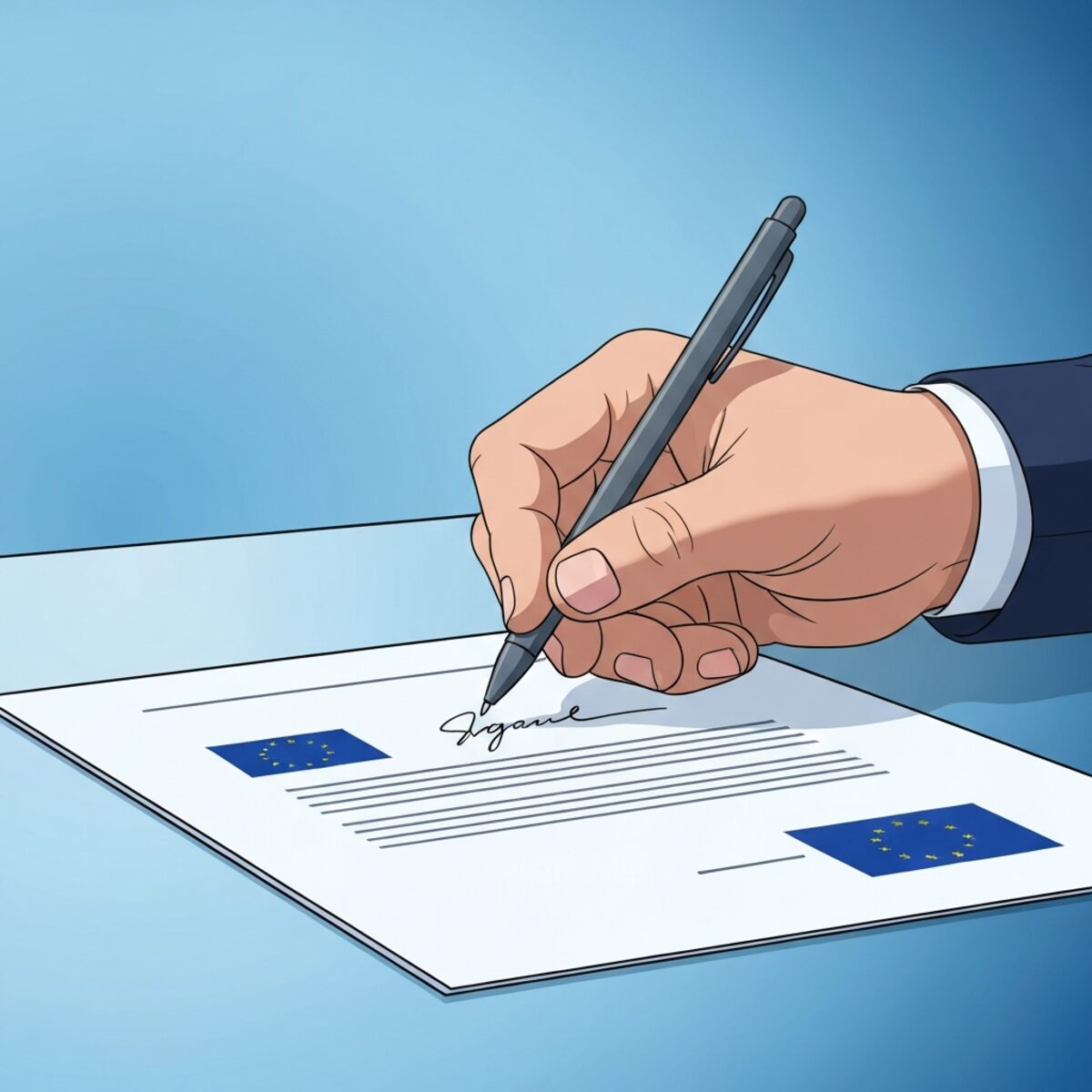
DocuSign built the e-signature category. It's the name people reach for when they need a contract signed digitally, the same way people say "Google it" instead of "search for it." But for European businesses in 2026, name recognition isn't enough.
The EU's eIDAS regulation sets a legal framework for electronic signatures that goes far beyond what most US platforms were designed for. European law distinguishes between simple, advanced, and qualified electronic signatures (QES) — and only QES carries the same legal weight as a handwritten signature across all 27 EU member states. DocuSign supports QES through partners, but it wasn't built around it.
Meanwhile, GDPR enforcement continues to tighten. The EU-US Data Privacy Framework faces ongoing legal challenges. And for industries like finance, healthcare, and government, proving where signature data is processed and stored isn't optional — it's a regulatory requirement.
Here are five European e-signature platforms worth evaluating alongside DocuSign.
The Baseline: Where DocuSign Stands
DocuSign is headquartered in San Francisco and processes data primarily through US infrastructure, though it offers EU data residency for enterprise customers via its data centre in Frankfurt. It supports simple and advanced electronic signatures natively, and offers QES through partnerships with European trust service providers.
DocuSign is eIDAS-compliant for simple and advanced signatures. For QES, you'll need the DocuSign ID Verification add-on plus integration with a qualified trust service provider — it works, but it's bolted on, not built in.
Pricing starts at approximately €13/user/month (Personal plan, limited to 5 documents/month). The Business Pro plan at ~€38/user/month unlocks most features. QES capabilities require enterprise pricing.
For international teams that primarily need simple e-signatures with a polished UX, DocuSign remains hard to beat. But if eIDAS QES, EU data sovereignty, or cost efficiency are priorities, the European alternatives below deserve serious consideration.
1. Yousign (France)
Best for: European SMBs wanting a polished, affordable e-signature platform
Yousign is a French company (headquartered in Paris) and one of Europe's fastest-growing e-signature providers. It's a qualified trust service provider (QTSP) under eIDAS, meaning it can issue qualified electronic signatures directly — no third-party integration needed.
All data is processed and stored exclusively in France, within OVHcloud data centres. Yousign has been profitable and independent, which matters in a market where many startups burn through funding.
Strengths:
- Native QES support (eIDAS-qualified trust service provider)
- All data stored in France (OVHcloud infrastructure)
- Clean, modern UX comparable to DocuSign
- API-first approach with excellent developer documentation
- Competitive pricing for SMBs
- GDPR-compliant by design
Weaknesses:
- Smaller integration ecosystem than DocuSign
- Less brand recognition outside France
- Limited advanced workflow automation on lower tiers
- No self-hosted option
Pricing: From €9/month (Starter, 10 signature requests/month). Pro plan from €24/month (unlimited). Custom enterprise pricing available.
Data residency: France (OVHcloud data centres)
2. Skribble (Switzerland)
Best for: Businesses needing all three eIDAS signature standards in one platform
Skribble, based in Zurich, positions itself as the Swiss Army knife of e-signatures (fitting, given the nationality). Its key differentiator: it offers simple, advanced, and qualified electronic signatures in a single platform, letting users choose the right signature level per document.
Skribble partners with Swisscom Trust Services (a qualified trust service provider recognised across the EU and Switzerland) to deliver QES. Identity verification for QES can happen via video identification, eID, or in-person at designated locations.
Strengths:
- All three eIDAS signature levels in one platform (SES, AES, QES)
- Swiss and EU data residency
- Strong identity verification options for QES
- Intuitive UX with batch signing capabilities
- Integrations with common European tools (SAP, Abacus, etc.)
- Swiss jurisdiction adds additional data protection
Weaknesses:
- QES requires identity verification (adds friction for first-time signers)
- More expensive than Yousign on comparable tiers
- Primarily focused on DACH market — less presence in Southern/Eastern Europe
- Mobile experience could be smoother
Pricing: From €12/month (Fair Flat, SES/AES). Business plan from €85/month (includes QES). Pay-per-use option available (from €2.50/signature).
Data residency: Switzerland and Germany
3. SignRequest (Netherlands / EU-origin)
Best for: Teams already in the Google or Box ecosystem wanting a simple EU option
SignRequest was founded in the Netherlands and acquired by Box in 2021, becoming Box Sign. However, SignRequest's standalone product still operates and remains popular, particularly among European SMBs who value its simplicity and pricing.
As a now-Box-owned product, SignRequest's future direction is tied to Box's roadmap. But its EU heritage means the product was built with European compliance in mind, and it still processes data through EU infrastructure.
Strengths:
- Very affordable (generous free tier)
- Clean, no-frills interface
- Good API for developers
- Deep Google Workspace integration
- EU data processing
Weaknesses:
- Acquired by Box (US company) — future sovereignty uncertain
- No native QES support
- Limited advanced features (no bulk sending on free plan)
- Fewer identity verification options
- Product development may be deprioritised in favour of Box Sign
Pricing: Free (up to 10 documents/month). Professional from €7/user/month. Business from €12/user/month.
Data residency: EU (Netherlands-origin infrastructure, now under Box)
4. eID Easy (Estonia)
Best for: Organisations needing to support national eIDs across Europe
eID Easy is an Estonian company that takes a fundamentally different approach: instead of building yet another signing platform, it connects to national electronic identity systems across Europe. Estonia's digital identity infrastructure is arguably the most advanced in the world, and eID Easy leverages that expertise.
The platform supports identification and signing via national eID cards, Mobile-ID, Smart-ID, and other government-backed identity schemes across 25+ European countries. This makes it uniquely powerful for cross-border use cases where signers already have national eIDs.
Strengths:
- Supports 25+ national eID schemes across Europe
- Native QES through government-backed identity infrastructure
- Highest legal certainty (signatures tied to government-verified identities)
- API-first platform ideal for integration
- Estonian digital governance expertise
- GDPR and eIDAS compliant by architecture
Weaknesses:
- Not a standalone signing platform — designed for integration
- Requires signers to have national eID or compatible digital identity
- Less suitable for international (non-European) signers
- Minimal consumer-facing UX (it's a developer/integration tool)
- Smaller company with less brand recognition
Pricing: Pay-per-use model starting from €0.20/identification. Volume discounts available. No monthly minimums.
Data residency: Estonia / EU
5. D-Trust (Germany)
Best for: German enterprises and regulated industries requiring maximum legal certainty
D-Trust is a subsidiary of Bundesdruckerei (the German federal printing office — yes, the same entity that prints German passports). It's a qualified trust service provider under eIDAS and arguably the most institutionally backed e-signature provider in Europe.
D-Trust offers QES with identity verification through German eID (Personalausweis with online function), video identification, or in-person verification. It's used by German federal agencies, banks, and insurance companies — organisations where "maximum legal certainty" isn't a marketing phrase but a compliance requirement.
Strengths:
- Backed by Bundesdruckerei (German federal government entity)
- eIDAS-qualified trust service provider
- Highest institutional credibility in Germany
- QES with German eID integration
- ISO 27001 and Common Criteria certified
- German data residency guaranteed
Weaknesses:
- UX is noticeably less polished than consumer-focused competitors
- Primarily focused on German market
- Integration requires more technical effort
- Not designed for high-volume, self-service signing workflows
- Documentation could be more developer-friendly
Pricing: Enterprise pricing on request. Typically bundled with identity services. Individual QES certificates from ~€50/year.
Data residency: Germany (Bundesdruckerei infrastructure)
Comparison Table
| Feature | DocuSign | Yousign | Skribble | SignRequest | eID Easy | D-Trust |
|---|---|---|---|---|---|---|
| HQ | US | France | Switzerland | Netherlands (Box/US) | Estonia | Germany |
| eIDAS QES | Via partners | ✅ Native | ✅ Native | ❌ | ✅ Native | ✅ Native |
| GDPR Compliance | ✅ (with config) | ✅ Native | ✅ Native | ⚠️ (Box-owned) | ✅ Native | ✅ Native |
| EU Data Residency | Optional (enterprise) | ✅ France | ✅ Switzerland/Germany | ⚠️ EU (Box) | ✅ Estonia | ✅ Germany |
| National eID Support | Limited | France | CH/EU | ❌ | ✅ 25+ countries | Germany |
| Starting Price | ~€13/user/mo | €9/mo | €12/mo | Free | €0.20/use | Enterprise |
| Best For | Global teams | EU SMBs | DACH region | Budget/Google users | Cross-border eID | German enterprise |
Understanding eIDAS Signature Levels
A quick primer, since this is the key differentiator between European and US-origin platforms:
- Simple Electronic Signature (SES): Any electronic indication of agreement — a typed name, a checkbox, a drawn signature. Low legal weight, easy to dispute. This is what most DocuSign usage actually is.
- Advanced Electronic Signature (AES): Uniquely linked to the signatory, capable of identifying them, and detects any subsequent changes to the signed data. Higher legal weight.
- Qualified Electronic Signature (QES): An advanced signature created using a qualified signature creation device (QSCD), based on a qualified certificate issued by a qualified trust service provider. Legally equivalent to a handwritten signature across all EU member states. This is the gold standard.
Most US-built platforms default to SES. European platforms like Yousign, Skribble, eID Easy, and D-Trust were designed around the eIDAS framework from day one.
Which One Should You Pick?
- Need QES with polished UX for an SMB? → Yousign
- Want flexibility across all signature levels? → Skribble
- Budget-conscious and already use Google/Box? → SignRequest
- Building a platform that needs cross-border eID signing? → eID Easy
- German enterprise or regulated industry? → D-Trust
- Global team, simple signatures, maximum integrations? → DocuSign is still fine
The pattern is clear across the European SaaS landscape: US tools optimise for ease of use and global reach, while European alternatives optimise for regulatory compliance, data sovereignty, and legal certainty. For e-signatures specifically, the regulatory dimension is unusually important — a signature that doesn't hold up in court isn't much of a signature.
Frequently Asked Questions
Take the Next Step
Ready to audit your full SaaS stack for GDPR compliance? Download our free GDPR Compliance Checklist to evaluate every tool your team uses — from e-signatures to storage.
Looking for more European software alternatives? Check out our guides to European CRM tools for SMBs, Salesforce vs European CRM alternatives, GDPR-compliant project management tools, Dropbox vs European cloud storage alternatives, Calendly vs European scheduling alternatives, Webflow vs European website builder alternatives for building landing pages in the EU, and why data sovereignty matters.